

WE TREAT
Flat Feet (Pes Planus) Assessment and Treatment in Leeds
From flexible flat feet to more complex conditions, we provide personalised care for all ages.
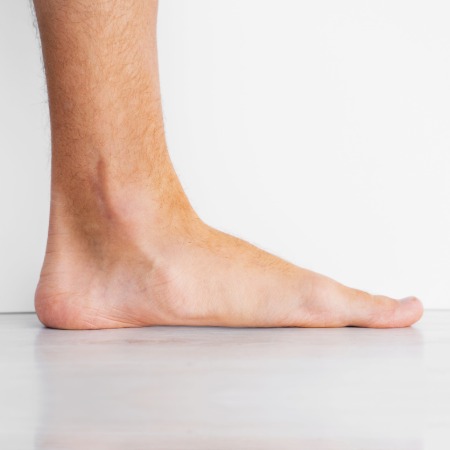
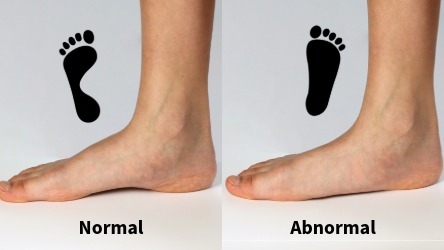
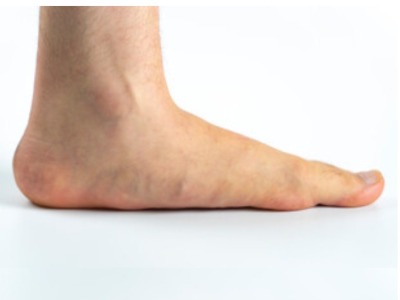
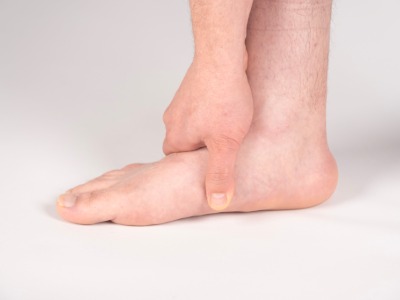
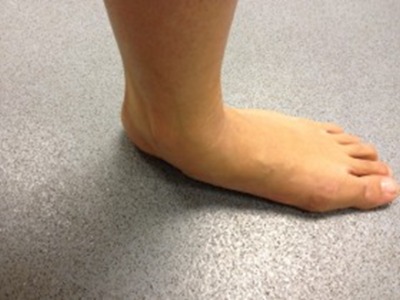
Flat feet, or fallen arches, occur more commonly when the inner arch of the feet is lower than normal. This change in foot structure alters how forces are distributed through the body, often causing compensatory pain in the ankles, knees, hips, or lower back.
Understanding the Causes of Flat Feet
A flat-foot profile can develop for several reasons, and identifying the specific type is essential for effective treatment.
Common causes include:
- Congenital Biomechanical: Issues present from birth.
- Acquired Biomechanical: Developing over time due to wear or strain.
- Arthritic: Changes in the joints causing the arch to drop.
- Spastic: Often related to neuromuscular conditions.
- Traumatic: Following an injury to the tendons or bones.
Our Comprehensive Biomechanical Assessment
At Foot Pain Centres of Leeds, our holistic, comprehensive assessment examines the structure and function of your feet, including a gait assessment performed while standing and sitting.
It’s essential to provide a total head-to-toe examination to determine the underlying structural causation of your flat feet.
The posterior tibial tendon is one of the most important tendons of the leg. Its muscle arises from the back of the tibia and fibula and winds around the inside of the ankle, the main part of the tendon attaching to the navicular bone on the inside of your arch.
The main function of the tendon is to hold up the arch and support the foot when walking. Increased foot pronation increases load and tension on the tendon, which can lead to inflammation of the tendon or its attachment and potential rupture. The tendon loses its ability to hold up the inner arch of the foot, leading to dysfunction.

We analyse:
- Arch Height & Structure: Measuring the degree of collapse.
- Joint Mobility: Testing the flexibility of the midfoot and ankle.
- Gait Analysis: Observing how your walking pattern affects your alignment.
- Lower Limb Tracking: Checking the impact on your knees and pelvis.
Tailored Treatment and Management
Our goal is to restore stability, improve alignment, and reduce the mechanical strain on your lower limbs. Depending on your assessment results, treatment may include the following:
- Custom Orthotic Therapy: Bespoke insoles designed to support the arch and realign the foot.
- Specialist Footwear Advice: Recommendations for shoes that provide the correct structural support.
- Rehabilitation Exercises: Strengthening routines to support the intrinsic muscles of the foot.
- Mobilisation Techniques: Manual therapy to improve restricted joint movement.
Our treatment plan is a 3-stage process:
Holistic Examination

An in-depth assessment of your body from head to toe.
Functional Correction

Using custom orthotics to gently guide your body back into alignment
Exercise Rehabilitation

For the best results, combine your orthotics with foot and ankle strengthening exercises to stay balanced and strong.
An Important Note Regarding Children’s Flat Feet
Early detection is vital. Because the foot undergoes significant changes during growth, we strongly recommend that children with flat feet are routinely checked. Managing alignment before children reach full skeletal maturity can prevent long-term deformation of the skeletal structure and chronic pain in adulthood.