

WE TREAT
Ingrowing Toenail Assessment and Treatment in Leeds
From mild discomfort to persistent pain and infection, we provide expert care tailored to your needs.
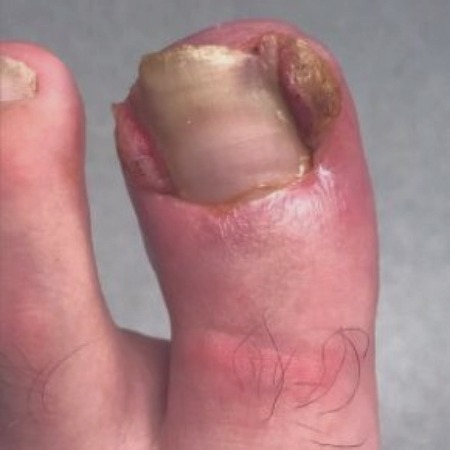
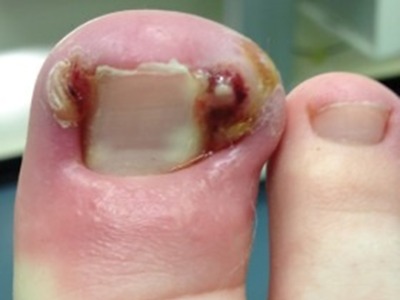
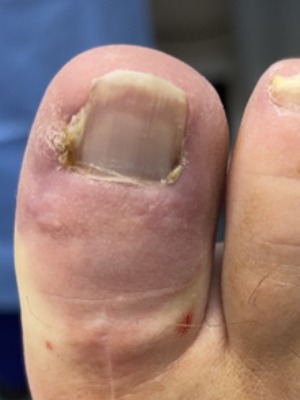
Ingrowing toenails occur when the edge of the nail pierces the surrounding skin, leading to redness, swelling, and tenderness. If left untreated, the area may develop hypergranulation tissue, a painful, overgrown area rich in blood vessels that bleeds easily.
While antibiotics are often prescribed for recurring infections, they only manage the symptoms. To permanently resolve the pain and prevent infection, the underlying nail issue must be corrected.
How are ingrown toenails caused?
Ingrown toenails are commonly caused by the following:
- Incorrect nail cutting: Cutting your toenails too short, or cutting the edges too deeply, will encourage the skin to fold over your nail and the nail to grow into the skin.
- Tight footwear and hosiery: This places increased pressure on the skin around your toenail; this will cause friction and irritation of the skin over the toenail, resulting in the nail piercing the skinfold.
- Direct trauma: Commonly, stubbing your toe or dropping a heavy object on your toenail can result in injury to the nail plate and subsequent ingrown toenails.
- Sweaty feet and poor hygiene: If the skin around your toenails is soft, it is easier for your toenail to pierce and embed into the nail edge.
- Natural shape of the nail: The sides of involuted (curved), wide or fan-shaped toenails are more likely to press into the skin surrounding your toenail.
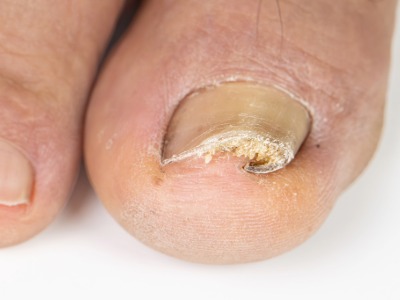
Involuted nail

Subungual haematoma caused by direct trauma
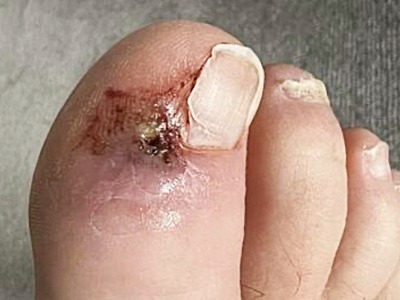
Trauma to the nail caused by tight footwear
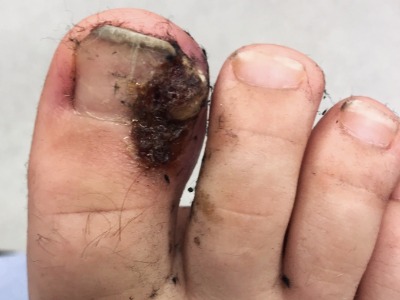
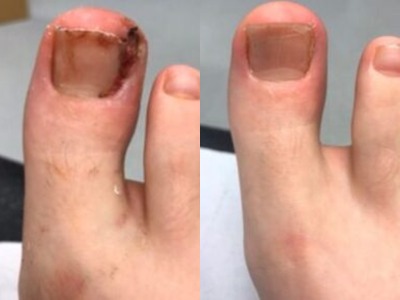
When a nail grows into the flesh, your body tries to protect itself by forming an overgrowth of puffy, red skin around the area. If left untreated, this tissue becomes firmly established under and around the ingrown toenail (hypergranulation). Because it is packed with sensitive blood vessels, even a tiny stub or tap to the toe can cause sharp pain and heavy bleeding.
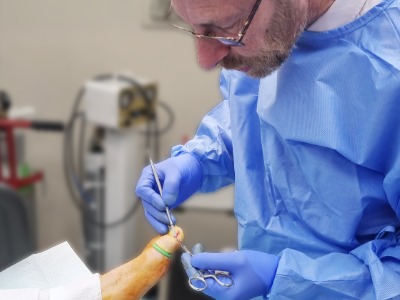
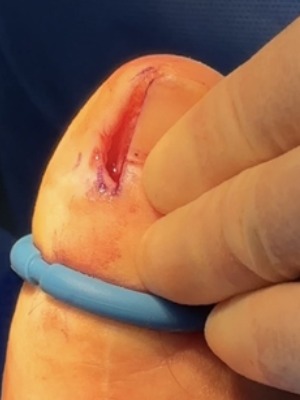
During the ingrowing toenail procedure, hypergranulation tissue is surgically removed.
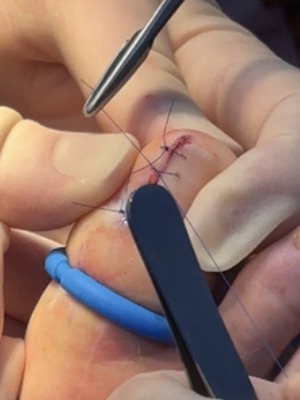
Before and after surgery
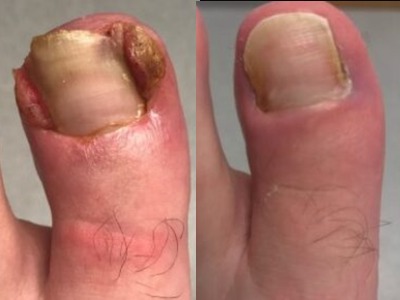
Surgical Solutions at Foot Pain Centres of Leeds
We offer three specialist procedures to resolve ingrowing toenails, prioritising patient comfort, rapid recovery, and excellent cosmetic results.
1. Partial Nail Avulsion (PNA)
The most common solution for ingrowing nails. We remove only the problematic section of the nail, leaving the rest intact.
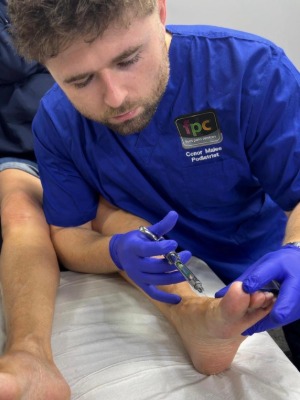
- Procedure: Performed under local anaesthetic (area numbed for up to 4 hours).
- Success Rate: Over 98%.
- Permanent Results: The clinician applies a chemical called phenol to the nail bed for three minutes to prevent the offending section from regrowing.
- Recovery: Most patients return to work or school immediately, with full healing in 2–3 weeks.
2. Total Nail Avulsion (TNA)
We recommend this procedure for patients with grossly thickened or fungal nails.
- The Process: The clinician removes the entire nail under local anaesthetic.
- Permanent Results: We apply phenol to the entire nail bed to stop future growth.
- Recovery: Healing takes slightly longer than a PNA due to the larger surface area involved.
3. Winograd’s Procedure
A specialist surgical technique designed for rapid healing, often recommended for patients with systemic health issues such as diabetes or poor peripheral circulation.
- The Process: The surgeon removes both the nail plate and the corresponding nail bed.
- Closure: Small sutures hold the wound together to accelerate recovery. These are typically removed after 10–14 days.
What to expect after surgery
- Most patients report very little or no pain after their operation. We advise that you take pain relief medication when you arrive home e.g Paracetamol.
- Those patients who have been prescribed Warfarin are advised to stop 24 hours prior to their procedure.
- Post-operative dressings are small in size, you are able to return home in normal footwear or if you prefer, bring an open-toe sandal or slipper.
- We advise that you rest with your operative foot elevated for a couple of hours when you return home.
- The local anaesthetic usually takes a couple of hours to wear off.
- We advise you not to bathe for 24 hours following the operation.
- We will book you in for your first redressing appointment the following day and then advise you how to dress your toe daily with sterile dressings that we provide.
- Should you encounter any post-operative problems, a 24-hour podiatry on-call service is available.
- We recommend being seen weekly until your wound is completely healed.
Driving a motor vehicle
Most patients are able to drive the day after their operation, although we recommend doing so when you feel comfortable and confident to perform an emergency stop in your vehicle.
Returning to sport
We advise that you wait until your wound is completely healed before returning to any sporting activity.
Time off work or school
As this is a minor procedure, patients can return the following day to work or school.