


How to Choose Running Shoes: The Ultimate Guide to Perfect Fit and Support
Finding the right running shoes can feel surprisingly complex, but getting the right match for your feet is the single best way to stay comfortable and avoid injury. Because every runner’s gait and foot structure are unique, there is no single “best” running shoe on the market, only the best shoe for you.
Here is everything you need to know to choose the perfect pair.
1. Anatomy of a Running Shoe: Key Components
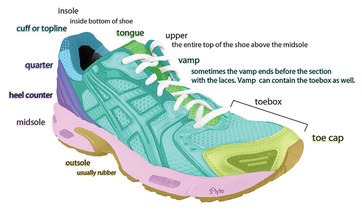
Understanding how a running shoe is constructed helps you identify what features you need:
- Outsole (Outersole): The treaded bottom layer, typically made of durable carbon rubber, which provides traction and wear resistance.
- Midsole: Considered the most vital part of the shoe, this layer provides cushioning and stability. Usually made from Ethylene Vinyl Acetate (EVA) or Polyurethane (PU), it often features dual-density foam—firmer on the medial (inner) side to reduce over-pronation.
- Upper: The fabric surrounding the top of your foot. Breathable synthetic materials help vent heat, while padded tongues and cushioned Achilles collars prevent lace pressure and rubbing.
- Heel Counter: A firm, rigid cup built into the rear upper to stabilise the rearfoot. It must fit correctly to protect the Achilles tendon from irritation.
- Post / Footbridge: Firm material embedded in the inner midsole to enhance support along the arch side.
2. Understanding Your Gait: Pronation vs. Supination
Matching a shoe to your natural movement pattern is essential for absorbing shock and maintaining efficiency:
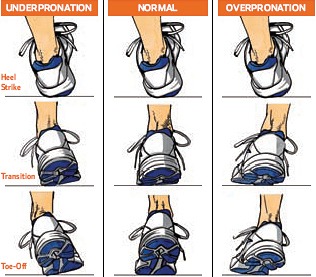
Over-Pronation (Rolling Inwards)
- The Foot: The ankle rolls excessively inward, flattening the arch. Flexible, highly mobile feet are prone to this.
- The Shoe Needed: Motion control shoes or stability shoes. These feature a firmer anti-pronation post on the inner midsole and a rigid heel counter to limit excessive motion.
Supination / Under-Pronation (Rolling Outwards)
- The Foot: The foot rolls outward, featuring a rigid, high arch that absorbs shock poorly.
- The Shoe Needed: Cushioned running shoes. These prioritise shock absorption over rigid motion control.
Note: If your biomechanics fall within normal limits, a neutral running shoe will provide the ideal balance of flexibility and support.
3. How to Fit Running Shoes Correctly
Follow these essential guidelines when trying on new pairs:
- Timing: Shop in the late afternoon, when your feet are naturally at their largest.
- Gear up: Wear your standard running socks and bring along your current running shoes so a specialist can assess your wear patterns.
- Length & Width: Ensure a full thumb’s width of space between your longest toe and the tip of the shoe. The toe box should allow room to wiggle without the foot sliding side-to-side.
- Measure Both Feet: Always measure both feet and size up if you are between sizes.
- No Break-In Period: Running shoes must feel comfortable the moment you put them on.
4. Fitting Running Shoes with Orthotics
If you wear custom orthotics, follow these key steps:
- Select a neutral running shoe with good flexibility across the toe box and midsole.
- Remove the factory insoles provided with the shoes.
- Ensure the inner width of the shoe matches the width of your orthotic across the arch. Your orthotics must sit completely flat inside.
5. Lifespan: How Long Do Running Shoes Last?
As a general rule, a quality pair of running shoes will last up to 1,000 kilometres.
However, the cushioning in the midsole usually degrades long before the rubber outsole wears down. Inspect your shoes regularly for deep creasing in high-load areas of the midsole and check for loss of torsional (twisting) stability.
Watch: Shoe Fitting Breakdown
For a visual step-by-step guide on evaluating gait and fit, check out this video tutorial:
Ready to Find Your Perfect Fit?
Don’t let the wrong footwear slow you down or lead to injury. Visit your local speciality running store today to get your gait analysed by an expert, try on a few pairs, and step into your best run yet!
Request a call back